
Let’s be honest — healthcare might be full of brilliant people, but it’s not always full of engaging communicators.
By Editor, Concierge Medicine Today
Whenever I’m in front of a crowd of doctors, I like to stir things up by asking:
“Who here has survived a mind-numbing medical lecture?”
Every hand ALWAYS goes up.
Every. Single. Time.
LISTEN TO THE AUDIO VERSION OF THIS ARTICLE AS A PODCAST
Because if you’ve spent more than 10 minutes inside banquet halls at healthcare conferences both big and small, you’ve likely endured a few afternoons trapped in the corner of a ballroom listening to something titled: “Advanced-stage presentation of cancer at the time of diagnosis and its associated factors among adult cancer patients at [Insert Name Here] Hospital, 20-something.”
And somewhere around slides 3-174, you started quietly planning your exit strategy.
Because let’s be honest — healthcare might be full of brilliant people, but it’s not always full of engaging communicators.
The Real Reason Most Medical Talks Fall Flat
Want to be a better speaker among your peers?
Ever wonder what makes one physician’s talk sparkle while another’s tanks?
Here’s the secret: great medical lecturers and the best public speakers don’t “fill” time — they “leverage” it.
They understand that data can inform, but only stories transform.
And the stories are what people remember. It’s what connects their mind to their heart.
15 CMT Medical Lecture Tips
Tip #1. 99% of speakers ruin their talk in the first sentence.
It’s not because they lack confidence — usually it’s the opposite. They know their stuff but there’s no heart. There’s no background story to it that colors the full picture for the audience.
Most medical lecturers (and you know this to be more than accurate!) open they’re title like they’re reading a peer-reviewed journal out loud. Worse yet, they introduce themselves by stating their name — like we can’t read the schedule on the sign.
Let’s face it — we’ve all been there. And if we’re honest, sometimes we’ve been that speaker.
Worse yet, we’ve concluded our lecture and when we ask for Q&A and it ends in silence with not one had raise or voice spoken, it’s not because you nailed every point and they soaked up every ounce of data. It’s because your audience mentally checked out 40-minutes ago and is now more halfway to completing their Starbucks in the App.
Sorry, but it’s true.
Tip #2. Start with a story, not your resumé because 🎤 the first two minutes and the last two minutes matter more than the middle!
One great speaker in the leadership and business space and a bestselling author, Jon Acuff (a fantastic speaker if you ever have the chance to listen), likes to say the first two minutes of your talk are your audition — not to repeat your topic title (which is usually already on the screen), but for your audience’s attention. You’re competing for their attention right at that critical moment that you say your first few words. So, make those words memorable!
Your audience didn’t walk into the room thinking, “I can’t wait to love this speaker.”
They walk in thinking, “Please, please don’t let this one bore me to tears.”
Those first 120 seconds decide whether people lean in or check out. So, the best speakers I know, skip the résumé, forgo the academic title, the disclaimer and start with a story! They lead the audience into a place of curiosity, not a recitation of credentials. That can come later. In fact, it might be necessary — but you need to earn their attention before you try to earn their trust.
Now, let’s talk about the last two minutes of your lecture!
That’s your encore.
It’s what people remember in the car ride home or in the hallway an hour later. Don’t end with, “Thanks for having me.”
End with purpose. Say something simple, clear, and actionable — the kind of line people can quote at dinner later that night.
The middle of your talk can wobble a little; but the edges can’t.
Every beginning tells us why we should care — not that you’re grateful to be here. We already know that.
The ending reminds us why what you talked about matters.
So if you’re a doctor prepping for your next presentation or podcast, remember: your audience doesn’t need another lecture; they need a moment. Start with heart. End with hope. Leave them better than you found them. Leverage the time.
Do. Not. Fill. The. Time!
Leverage it!
Skip the “I’m so honored to be here…” and “My name is Dr. So-and-So.”
We already got that information in the program. It’s on the wall, on the slide, and on the sign outside.
Instead, begin with something human.
Something that builds connection before you build your case.
Example:
“My Grandma was a Ukrainian Easter egg painter and a wicked-fast crocheter. One day I asked her to make me golf club covers… but more on that later.”
See what happened there? You’re curious. You’re leaning in.
That’s the goal.
CMT Tip #3: Tell a Story, Then Save the Moral for the End
Don’t give away the punchline as soon as you walk up because of your nerves. Let the tension build to something greater. You’re not just transferring knowledge — you’re creating a moment.
Carey Nieuwhof often says that tension is where transformation happens. Meaning, when you tell a story and resolve it too quickly, you rob your audience of the curiosity that keeps them leaning in.
A great communicator doesn’t just dump truth — they deliver it, piece by piece, with purpose.
Think of it this way: when you walk your audience into a story, let them feel a little lost before you help them find their way. That’s how real learning happens. Carey would tell you that “clarity isn’t the same as completeness.” Don’t rush to make your point — build toward it. Everyone is nervous and we’ll get to that tip in just a few moments. But, let the tension hang in the air just long enough for people to whisper internally, “Wait… I need to pay attention to this … where’s this going?”
Because when they feel that storyline tension, they’re engaged. And when they’re engaged, they’re ready to listen and maybe, make a change or take action.
The best communicators — and that includes you — don’t simply explain the data. They let the story breathe long enough for the audience to see themselves in it. If you’ve ever opened a bottle of wine and heard let it breath, you know what I’m talking about. Sure, it’s a little annoying and we all roll our eyes when we hear it, but there’s magic in those awkward and quiet moments. Because, when you finally land the moral of the story at the end of the runway, it feels less like information and more like a revelation.
Oh, and one more thing, please, avoid using vulgar language in your opening story. Sure, sometimes a well-placed, well-timed d-word may be fun, but avoid routine use. I’ve seen this too many times in medical lectures and it just makes you look crude and rude.
CMT Tip #4. Spot the “Happy Camper.”
There’s always one.
That one person smiling, nodding, and giving off “you got this” energy as you look out onto the crowd of faces.
Make eye contact with them.
Ignore the Grumpy Gus with his arms crossed — making eye contact with them throughout your presentation will just distract you and zap your energy.
Pro tip, look past them! Focus on your fans, not your critics.
You’ll feel the difference in your energy, smiles — and so will everyone else!
CMT Tip #5. Ditch the “green room” ego.
I love M&Ms but you really don’t need to hide backstage.
Walk to the four corners of the room you’re about to present in, small or large. Spend more time in the back than the front.
Shake hands. Ask questions. Smile but don’t get pulled into long conversations — that one is always tricky — but it’s important!
Connection happens before the mic turns on.
One of the best speakers I’ve ever seen started his keynote by quietly clearing people’s breakfast plates before he took the podium.
Now that’s servant leadership!
Remember, as a Physician, your words carry weight. But, you can’t teach that kind of humility.
And ironically, that’s what made people listen when he finally spoke.
Think about how you can do the same in the future.
CMT Tip #6. Make friends with the A/V crew.
I’ve shared my fair share of frustration and laughs with the A/V folks over the years. It’s a tough job. And, they’ve literally heard it all. From a terrible comedian to a memorable magician (who was actually pretty impressive), if you can connect your story and your content and keep the A/V teams attention with your medical lecture, you’ve accomplished something less than dare I’d say, less than 3% of the medical community of lecturers has ever done!
We actually had this happen at our industry annual conference, the Concierge Medicine Forum in Atlanta, GA USA recently. The physician speaker talked about dental care and the correlation between health, gums, and your heart. One of the A/V team members came up to me after the event was entirely over and said, “You’ve got to bring that dentist guy back — that was such a great talk.”
That’s how you do it folks!
Remember, be nice to the A/V team. They control your volume, your lighting, and — let’s be real — your fate!
Be kind. Be prepared. And for heaven’s sake, don’t test new slides 10 minutes before go-time — and please, save the videos for your web page — no one wants to see those!
CMT Tip #7. Don’t turn the mic on early.
We’ve all been there. And, no one wants the fear of taking your mic accidentally out of the room and forgetting it’s on and going back stage (or to the bathroom — remember Naked Gun?!)
Trust me.
You do not want your backstage commentary accidentally broadcast to a ballroom full of peers.
Once you walk off stage, give the mic back to the A/V team — trust me, you don’t want those problems.
CMT Tip #8. Get there early. Talk to people.
This kind of dovetails into tip #5 but also includes the habit of when you go or are invited to speak, you learn names. Ask people before you start around the room (I like to use the four corners strategy) and learn why they came. Then sprinkle those names (if you feel like they’d smile about it) into your talk.
This tip instantly transforms any boring medical lecture into a conversation.
CMT Tip #9. No videos. No live demos.
Videos glitch. Wi-Fi dies. Screens freeze.
And nothing kills a moment faster than “Can someone fix this?”
Don’t assume your A/V team can deal with it. They can, but they shouldn’t have to. I once saw a great physician give a fantastic opener and then ruin it with a 10-minute video. Don’t be that guy/gal.
If you can’t say it without PowerPoint, you’re not ready to say it at all.
CMT Tip #10. Don’t debut your talk for the first time on stage.
Unfortunately, this is big one!
It’s often overlooked and ignored because of education and ego. But trust me, the best speakers know the cadence. They know precisely when and where to let a point breath with silence.
Sure you might know the content, the research, the literature and the topic backward and forward because of your profession, specialty or training and experience. But, you’ve never presented this lecture to this specific group of people. And, you never will again. DO NOT LET THE FIRST TIME YOU PRESENT THIS TALK TO YOUR PEERS, BE YOUR PRACTICE SESSION!
You want to know exactly how medical lectures get boring, it’s the moment you assume you can fill the time vs. leverage it.
Slides don’t save speakers — rehearsal does.
Prepare. Practice. Present. (In that order.)
Your debut should never double as your first run-through or a practice session.
CMT Tip #11. Keep calm and text your family.
Before I walk up on any stage, I text my wife or kids.
Not for advice — for grounding.
They remind me who I am off-stage, which keeps me humble on stage.
Because in the end, this isn’t about spotlight.
It’s about servanthood.
CMT Tip #12. End with gratitude and purpose — not filler.
I’m grateful for any and every opportunity to speak about what I’m passionate about. I’m sure you are too. But, the event organizer doesn’t need you to say thank you from the stage. They want you on that stage and behind that mic because you bring something different.
Save the thank-yous and acknowledgments for your thank you card. (And you should be writing them a thank you card — like travel with them in your backpack and write it before you leave the venue!)
Why? Because it’s the right thing to do!
Second, you just might do what other speakers forget to do because of ego — and, you’ll probably be on the short list to get invited back next time! — So, don’t forget the handwritten thank you note to the event organizer (and if you really wanna impress them, slip a $5 coffee gift card in with the thank you note — event organizers rarely get the appreciation they deserve for herding cats and keeping crowds organized and moving!)
Close your speech with clarity, not clichés. People will forget your credentials. They’ll remember your authenticity, passion and conviction.
BONUS! CMT Tip #13. Measure success differently.
The best compliment isn’t applause — it’s quiet attention.
It’s about the feedback and questions you receive in the hallway (please go the hallway — don’t stand at the podium — it just makes it awkward for the next speaker to politely ask you to leave)
For example, if the A/V tech, who knows nothing about your field, says,
“That was actually really interesting,”
you’ve nailed it.
Sure, you might be speaking to a group of your peers, but they’ve got their own egos and reasons for being there. I love it when they approach my speakers after the fact and surround you with questions. That’s the takeaway of success that your content connected with the audience. And, if you can take something complex and make it simple enough for the A/V technician who has literally listened to every topic (ever!) — that’s leadership!
Final Thought
At Concierge Medicine Today, we often remind doctors:
“It’s no longer about being the best doctor in the world.
It’s about being the best doctor for the world.”
The same is true FOR speakers.
Don’t aim to impress.
Aim to connect.
You don’t need to be perfect on stage.
You just need to be present.
And if you can do that?
We’re listening.
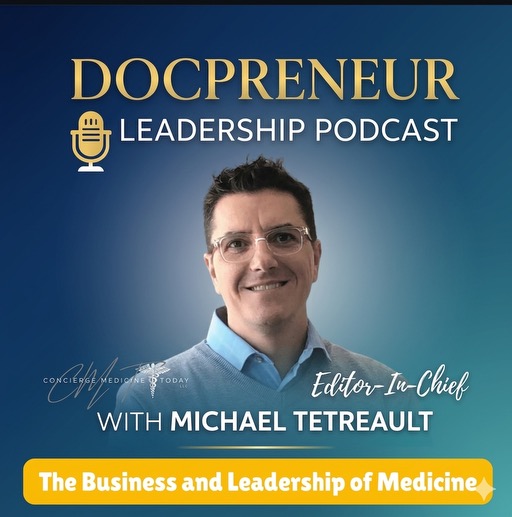
If you’d like to connect with our audience at our next industry annual conference, I invite you to submit your proposal to be a speaker here at the upcoming Concierge Medicine Forum, or, join me for a podcast. We’d love to hear from you!
FOR You. FOR Doctors.
~Michael
Discover more from Concierge Medicine Today
Subscribe to get the latest posts sent to your email.
Categories: Healthy Leadership Practices