How the definition of healthcare luxury has shifted, why patient trust is at a historic low, and what membership medicine is doing about both.
By the Editor-in-Chief, Concierge Medicine Today
One of the quotes I return to most often when talking with physicians who are curious about this industry — and who want to follow their own vision for what healthcare could and should be — is this one. It was shared on a leadership podcast in December 2017, and it has aged remarkably well.
“Somebody is already working on a uniquely better approach, a uniquely better product, a uniquely better environment, a uniquely better model. Someone out there is currently messing with the rules of the prevailing model. The goal isn’t necessarily to be the first or the pioneer of uniquely better — but people should be in a position organizationally and personally to recognize it when it comes along.” — A.S., Leadership Podcast, Part 2, December 1, 2017
Why is it so relevant today?
Well, because right now, in subscription-based healthcare delivery, somebody is absolutely working on uniquely better. To be more clear, ‘someone, somewhere is working on an idea that will make you obsolete.’ And the physicians who recognize this — they are going to be the ones who are positioned personally and organizationally to act on it, pivot and adjust. I would also argue that they are the ones who will continue to redefine what American medicine looks like in the future.
What Luxury in Healthcare Used to Mean
Two or three decades ago, luxury in healthcare had a clear and fairly universal definition. It meant access to skilled physicians and specialist teams, private recovery rooms, attentive nursing staff, reduced waiting times, and advanced medical technology. The entire environment in which care was delivered — the surroundings, the amenities, the experience — was considered as important as the clinical expertise itself.
RELATED STORY | TIMELINE OF INDUSTRY
History of Cash Only Healthcare Programs in America (1900s-Present Day)
That version of luxury was aspirational. It was reserved for those who could afford to pay for it, and it was largely defined by the physical infrastructure of care: marble lobbies, private suites, and concierge staff who remembered your name.
That definition no longer holds.
Convenience Is the New Luxury
Today’s patient — across income levels, age groups, and geographies — defines luxury differently. The new luxury is convenience. It is: I want it now, on my terms, with a provider who knows my name, answers my messages, and doesn’t make me wait three weeks for a 7-minute appointment.
This shift reflects something deeper than consumer preference. Patients today are actively seeking more transparent, modern, and affordable healthcare options. They are turning to subscription-based services and cash-pay models because of genuine dissatisfaction with traditional insurance structures and the institutional medical office experience. What they are asking for is not extravagance — it is respect, clarity, attention to detail, and above all, a meaningful relationship with their physician.
The average patient no longer views proactive healthcare spending as a burden exclusive to the wealthy. Increasingly, informed patients understand that neglecting their health today will cost significantly more — financially, physically, and emotionally — tomorrow. That is a fundamental shift in the cultural relationship between Americans and their healthcare.
Healthcare is expensive — and it is not becoming more affordable. Patients want something different for their money than bills laden with industry jargon they cannot understand, from providers who cannot find time to explain it.
The Trust Problem Is Real — and the Data Is Clear
This cultural shift does not exist in a vacuum. It is being driven, in large part, by a measurable collapse in patient trust.
A comprehensive joint survey by Massachusetts General Hospital and Harvard Medical School found that in April 2020, 71.5% of U.S. adults expressed confidence in physicians and hospitals. By January 2024, that figure had fallen to 40.1% — a decline of more than 31 percentage points in under four years, consistent across gender, race, and age groups.¹
A separate Gallup poll found that the share of Americans reporting trust in the health system had declined from a high of 77% to 56% by 2023.² And among the patients with the lowest levels of trust, the most commonly cited reason was not clinical incompetence — it was the perception that financial motives were prioritized over patient care (35%), followed by concerns about quality and negligence (27.5%), and the influence of external entities (13.5%).³
This is not simply a post-pandemic hangover. Medical Economics reported in 2022 that 87% of physicians surveyed in a 2017 Sermo poll said their patients trusted them less than a decade earlier. A 2021 Morning Consult survey found that while 74% of baby boomers trusted the healthcare system “some” or “a lot,” that figure dropped to just 44% among Gen Z.⁴
The erosion of trust is not attributable to any single physician or practice. It reflects a broader cultural fracture — accelerated by the COVID-19 pandemic, systemic healthcare inequities, and the perception that the system is designed around institutional efficiency rather than the individual patient. These are not marginal concerns. They are the context in which every physician-entrepreneur operating today is building their practice.
Rebuilding that trust — through transparency, patient-centered care, and equitable treatment — is not just a moral imperative. It is the business case for membership medicine.
The Innovation That Began Nearly 30 Years Ago
The story of concierge and membership medicine is, at its core, a story of physicians who saw the trust problem coming — and built something different in response.
Beginning in the mid-1990s with MD² International in Seattle and accelerating through the 2000s with MDVIP and the emergence of Direct Primary Care, physicians have been quietly engineering an alternative to the institutional model. These models began by serving a narrow, affluent patient population. That has changed significantly.
Today, subscription-based healthcare models span a wide range of price points and service configurations — from virtual primary care subscriptions available for a nominal monthly fee to individually owned practices serving local communities. From DPC models charging $50 to $100 per month to executive health programs offering comprehensive diagnostics and 24/7 physician access. The common thread is not price. It is philosophy: more time, more attention, more prevention, and a doctor-patient relationship built on something other than the economics of the seven-minute appointment.
This innovation reflects the foresight of pioneering physicians who introduced something genuinely old-fashioned into a modern landscape: the belief that medicine works best when the physician knows the patient.
Two Developments Not Often Advertised
As these models have evolved, two significant developments have emerged that rarely receive adequate attention in mainstream healthcare coverage.
The first is patient burnout. Across demographics, there has been a notable decline in trust toward local healthcare providers and institutions — not because individual physicians have failed, but because the system around them has. The APA’s 2022 COVID-19 Practitioner Impact Survey documented that 46% of psychologists reported struggling to meet patient demand — up from 30% in 2020 — while 45% reported feeling burned out themselves.⁵ The mental health access gap is real, it is widening, and it is further eroding the patient’s relationship with the broader healthcare system.
The second development is physician renewal. The same models that patients are gravitating toward are also rescuing physicians from the industry. Physicians who transition to concierge or membership medicine consistently report higher career satisfaction, stronger patient relationships, and — perhaps most importantly — a renewed sense of purpose. One physician we spoke with recently put it plainly: “It saved my marriage.” That is not a marketing claim. That is a data point about what happens when physicians are given the time and autonomy to actually practice medicine.
Yes, critics argue that membership models contribute to the physician shortage by reducing the number of patients any single physician can serve. It is a fair concern, and it deserves honest engagement. But it is also worth asking: what is the cost of losing physicians entirely to burnout? The physician who transitions to a concierge model with 400 patients is still practicing medicine. The physician who leaves the field entirely is not.
The Entrepreneurial Physician as a Community Asset
Healthcare has always had early adopters — physicians who were willing to challenge the prevailing model before the prevailing model was willing to be challenged. Concierge medicine was dismissed as boutique and elitist when it emerged in the 1990s. So was plastic surgery, until it became a standard-setting specialty. So was evidence-based medicine, until it became the foundation of clinical practice.
The question worth asking is not whether membership medicine is appropriate or accessible enough. The question is whether we are willing to let the market, the patients, and the local community determine the viability of a model — or whether we prefer to stifle that innovation in defense of a status quo that is, by measurable evidence, failing the people it was designed to serve.
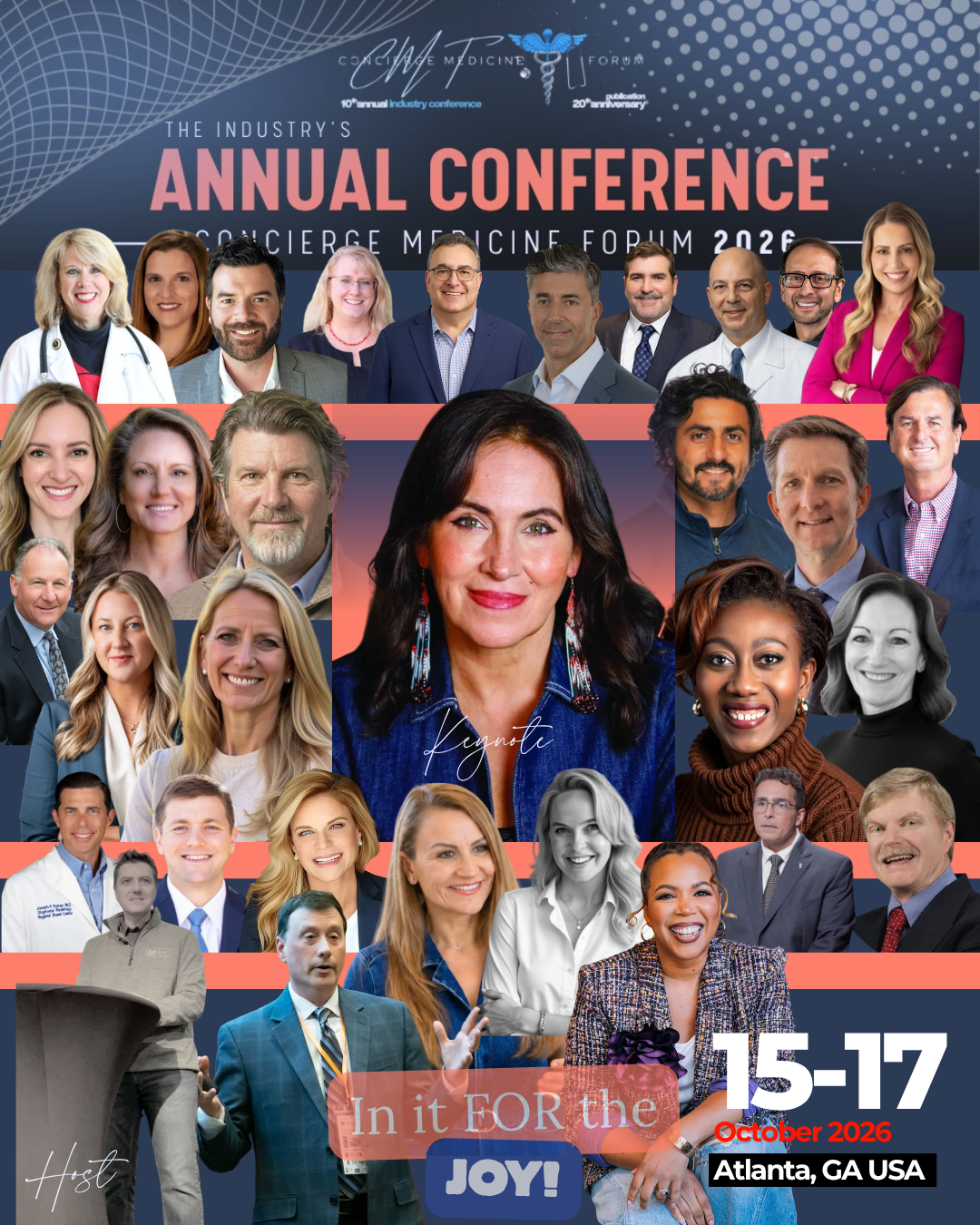
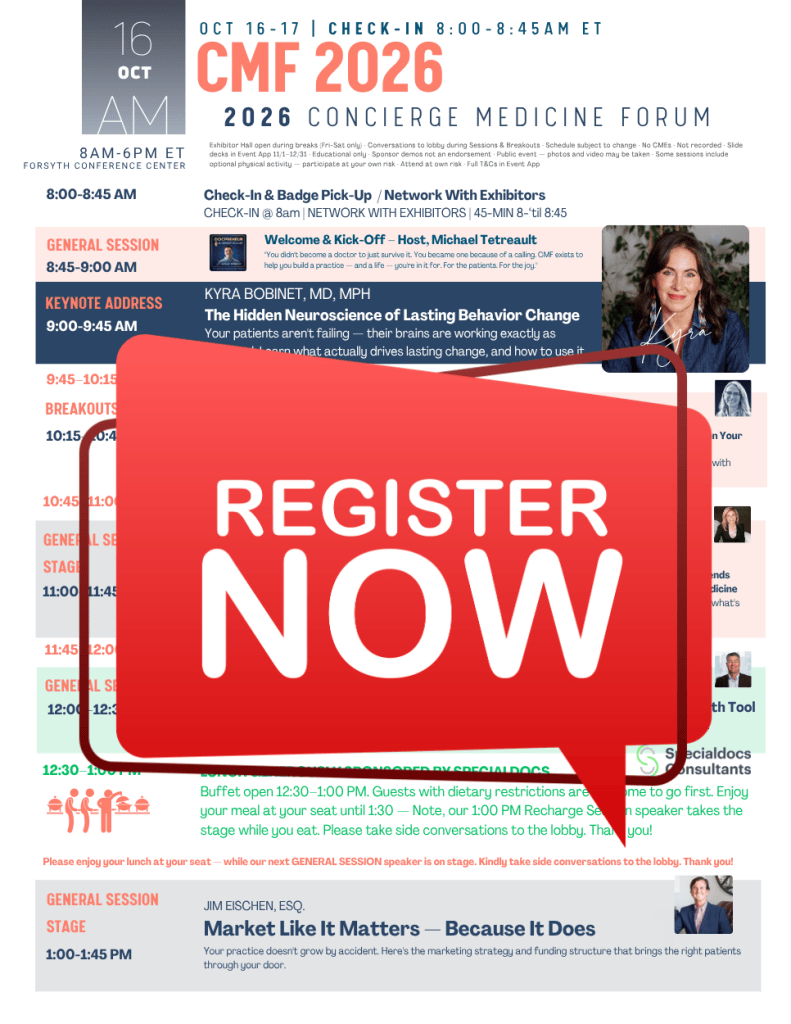
As one physician keynote speaker at the Concierge Medicine Forum in Atlanta noted: “In this growing market, patient engagement and behavior change will be requisite skills for physician-entrepreneurs to offer value to their patients in the future.” That is not a prediction about a niche industry. It is a description of where all of medicine is headed.
The Better Standard
Luxury in healthcare today is not a marble lobby. It is a physician who answers a text within the hour. It is a practice that sends a follow-up after an appointment. It is a doctor who has read your file before you walk through the door, and who has enough time in the visit to ask how you are actually doing.
These are not extravagant expectations. In almost every other service industry, they would be baseline. In American healthcare, they remain aspirational for the majority of patients.
Membership medicine — in all its forms, at all its price points — is not the only answer to that gap. But it is one of the clearest, most patient-centered answers currently being built. And the physicians building it are not opting out of healthcare. They are choosing to practice it the way they were trained to.
It’s no longer just about being the best doctor in the world. It’s about being the best doctor for the world — for your patients, and for your local community.
Editor’s Note: Membership medicine models are not medical specialties and are not a replacement for, nor an insurance product. Physicians considering these models should consult appropriate legal and compliance counsel.
Sources & Citations
- Perlis, R.H. et al. (2024). “Trust in Physicians and Hospitals During the COVID-19 Pandemic in a 50-State Survey of US Adults.” JAMA Network Open. DOI: 10.1001/jamanetworkopen.2024.24984. Also cited in: Physicians Weekly, “The Erosion of Trust in Healthcare: Restoring the Patient-Physician Relationship.” https://www.physiciansweekly.com
- Gallup. Cited in: Perlis et al. (2024), op. cit. Also cited in: American Journal of Managed Care (AJMC), “Erosion of Trust in Health Care: A Public Health Crisis.” https://www.ajmc.com/view/erosion-of-trust-in-healthcare-a-public-health-crisis
- Perlis, R.H. et al. (2024), op. cit. Open-ended responses from survey participants with lowest trust levels. Also summarized by CIDRAP: “Americans’ Trust in Doctors, Hospitals Plunged During Pandemic.” https://www.cidrap.umn.edu
- Medical Economics. (2022). “Top Challenges of 2022, No. 5: Loss of Trust in Physicians.” Citing Sermo (2017) and Morning Consult (2021). https://www.medicaleconomics.com/view/top-challenges-of-2022-no-5-loss-of-trust-in-physicians
- American Psychological Association. (2022). “2022 COVID-19 Practitioner Impact Survey.” Summarized by Advisory Board: https://www.advisory.com/daily-briefing/2022/11/18/apa-survey
© 2007–2026 Concierge Medicine Today, LLC. All rights reserved. Concierge Medicine Today is the industry’s trade publication, established 2007. DISCLAIMER: This content does not constitute medical, financial, legal, or other professional advice. This content is not without error or omissions.
Discover more from Concierge Medicine Today
Subscribe to get the latest posts sent to your email.
Categories: National Headlines