

Patience isn’t a personality trait. In high-performing concierge practices, it’s a clinical skill — trained, reinforced, and modeled from the top. Here’s what the research says about building the kind of practice culture that makes both physicians and patients want to stay.
 By Concierge Medicine Today
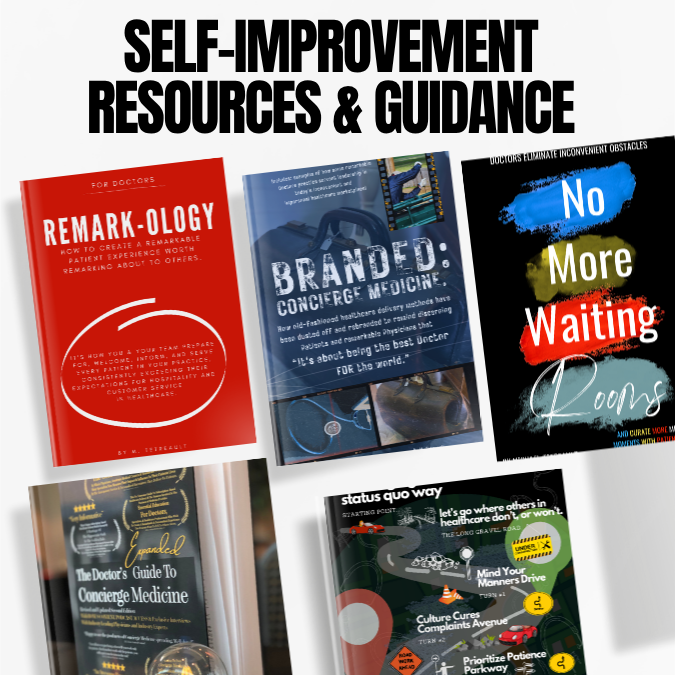
The graphic is deliberate: on the road to a better practice, there’s a rerouting sign placed right before “Prioritize Patience Parkway.” Rerouting is exactly the right metaphor. Most physicians don’t arrive at patience naturally in a healthcare system that has spent decades rewarding speed. Patience — real patience, not performed patience — requires a structural environment that makes it possible and a leadership culture that models it.
According to the American Hospital Association’s analysis of 2023 physician survey data, physician job satisfaction rose to 72.1% from 68% in 2022 — and the percentage of physicians who felt valued by their organizations rose to 50.4% from 46.3%. Yet 16% of physicians still did not feel valued at all by their organization. American Hospital Association
That 16% matters. A physician who does not feel valued will struggle to consistently make patients feel valued. A staff member who is not thanked will struggle to thank patients. Culture runs downhill from the top.
A study published in the Journal of Nursing Administration found that medical units that received structured training in gratitude, mindfulness, self-compassion, and empathy — called the GRACE program — saw significantly greater increases in patient satisfaction scores compared with units that did not receive the training. PubMed
 The umbrella on the map is not incidental imagery. Every practice encounters difficult patient interactions, unexpected complaints, scheduling storms, and operational turbulence. The question is not whether those situations arise. The question is what your team does when they do.
Research cited by Johns Hopkins Medicine physician Jennifer Janus, MD, suggests that physicians who focus on the rewards of their role experience decreased dissatisfaction and growing compassion — and that patients are more likely to receive excellent clinical care from providers who are emotionally resilient and empathetic to their needs. Rendia
Patience is not passive. In a well-led concierge practice, it is one of the most actively managed elements of the patient experience.
Sources:
- American Hospital Association. “Work Remains, but Physician Burnout Rates Are Coming Down.” AHA Center for Health Innovation Market Scan, July 2024. https://www.aha.org/aha-center-health-innovation-market-scan/2024-07-16-work-remains-physician-burnout-rates-are-coming-down
- Victorson D, et al. “Development and Implementation of a Brief Healthcare Professional Support Program Based in Gratitude, Mindfulness, Self-compassion, and Empathy.” Journal of Nursing Administration, April 2021. https://pubmed.ncbi.nlm.nih.gov/33734181/
- Janus J. Cited in: Rendia. “The Important Role Gratitude Plays in Health Care.” https://rendia.com/resources/insights/the-important-role-gratitude-plays-in-health-care/
Concierge Medicine Today is an independent editorial publication. All content is educational and informational in nature and does not constitute medical, legal, financial, or accounting advice. #FORDoctors
Discover more from Concierge Medicine Today
Subscribe to get the latest posts sent to your email.
Categories: National Headlines